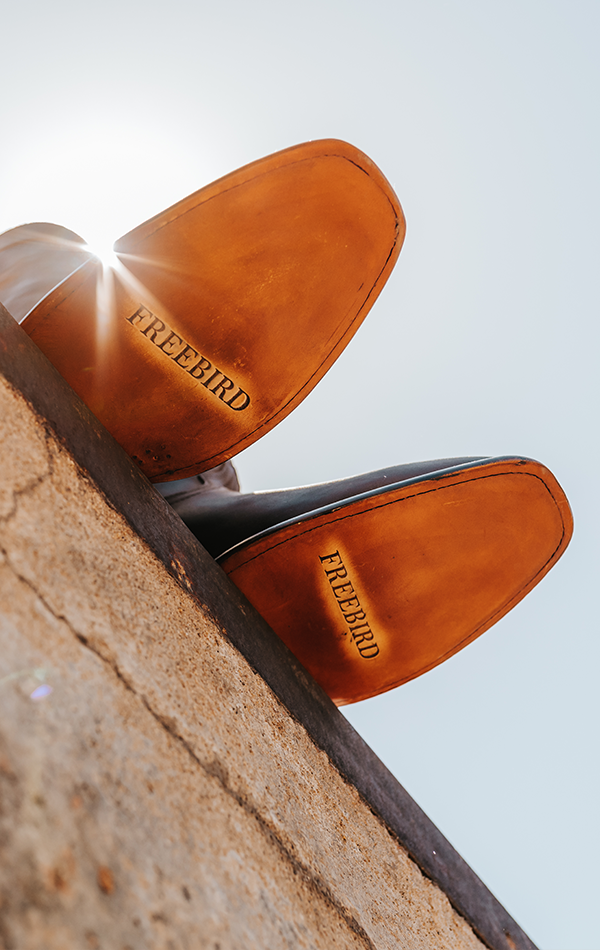
Freebird shoes are made to collect stories, not dust. But between city sidewalks, festival fields, spilled drinks, surprise rainstorms, and the occasional night that gets a little more adventurous than planned, even great leather needs a little attention.
The most important rule is simple: care for the material you own, not just the style name printed on the box.
A smooth full-grain leather boot should not be cleaned like suede. An embossed snake finish should not be treated exactly like genuine python. Rock-tumbled leather is intentionally distressed and should not be polished until every variation disappears.
This guide covers how to clean, condition, protect, dry, store, and repair Freebird boots, booties, shoes, and sandals across the different leather types and finishes found in our current collection.
Quick Navigation
Key Takeaways
- Check the product description to identify the exact material before applying anything.
- Freebird leather is durable, but it is not waterproof.
- Always remove loose dirt before conditioning or applying a protector.
- Let wet footwear air dry naturally; never use a hair dryer, radiator, or direct sunlight to dry soaked leather.
- Smooth leather, suede, genuine python, genuine ostrich, and rock-tumbled leather require different care.
- More product is not always better. Light, occasional care is safer than oversaturating handcrafted leather.
- Proper storage and timely sole repairs are just as important as cleaning the upper.
Leather Care at a Glance
| Material or Finish | Routine Care | Products and Tools | What to Avoid |
|---|---|---|---|
| Smooth full-grain leather | Wipe or brush away dirt, condition when dry, and protect from moisture | Soft cloth, soft brush, leather conditioner, leather-safe water-resistant spray | Soaking, using direct heat to dry wet leather, overconditioning |
| Patent leather | Wipe with a soft, lightly dampened cloth, dry with a clean cloth, and buff gently to restore shine | Soft microfiber cloth, clean water, patent-leather cleaner if needed | Standard conditioner or polish, Magic Eraser, abrasive brushes, alcohol, soaking, and direct heat |
| Embossed or textured leather | Clean gently along the pattern and use products sparingly | Soft brush, soft cloth, full-grain leather care products | Treating every snake or croco pattern as genuine exotic leather |
| Tooled, braided, laser-cut, or multi-leather | Brush dust from grooves and test each material or color separately | Small soft brush, soft cloth, minimal conditioner | Saturating cutouts, seams, braiding, or contrasting panels |
| Suede | Let dry, brush away dirt, and restore the nap | Dedicated suede or wire brush, suede-safe protector | Standard leather conditioner, polish, or heavy rubbing |
| Genuine python | Wipe lightly in the direction of the scales and apply exotic care sparingly | Dry soft cloth, exotic-leather spray | Lifting the scales, soaking, or standard leather conditioner |
| Genuine ostrich | Brush or wipe gently and apply a thin layer of exotic care | Soft brush, soft cloth, exotic-leather spray | Excess moisture, heavy product application, or direct heat |
| Rock-tumbled or distressed leather | Gently remove surface dirt and preserve the lived-in finish | Soft brush, duster | Aggressive polishing or trying to make the finish perfectly even |
| Leather-and-denim or mixed materials | Clean each section separately | Separate clean cloths and material-appropriate care | Allowing leather conditioner or protector to transfer onto fabric |
First, Identify Your Leather
Before reaching for a brush or spray, read the material details on the individual product page.
Color names can describe an appearance without identifying the actual material. For example:
- Randi Black Snake is made with snake-embossed full-grain leather.
- Jules White Snake is made with snake-embossed full-grain leather.
- Morgan Python is made with genuine python leather.
- Marshall Python is made with genuine python leather.
- Coal is available in standard leather, embossed, suede, genuine python, and genuine ostrich variations.
That distinction matters. Embossed leather has a pattern pressed into traditional leather and generally follows a full-grain leather routine. Genuine python has natural scales that require lighter handling and a product specifically formulated for exotic leather.
When the description says embossed, follow the full-grain or textured-leather directions. When it explicitly says genuine python, genuine ostrich, or exotic leather, follow the exotic-care directions.
Seven Rules for Caring for Any Freebird
No matter which pair is in your closet, these habits will help protect its character and construction.
1. Remove Dirt Before Applying Product
Conditioner and protective spray should never be layered over dust, dried mud, or grit. Otherwise, that debris can be rubbed farther into the finish.
Start with a dry, soft cloth or brush. Pay attention to seams, stitching, welt edges, straps, buckles, and decorative leatherwork where dirt tends to hide.
2. Test Before Treating the Entire Shoe
Hand-finished and naturally varied leather can react differently to moisture and care products. Conditioner or protector may slightly deepen the leather’s color or change its finish.
Test a small amount in an inconspicuous area, such as the inside of the shaft or near the heel, and allow it to dry before treating the rest of the shoe.
3. Use Less Than You Think You Need
Leather should not look wet or saturated after conditioning. Start with a small amount applied to a cloth rather than pouring or spraying heavily onto the shoe.
You can always apply a little more. Removing too much product is considerably less fun.
4. Never Soak Leather Footwear
Do not submerge leather boots, put them in a washing machine, or run sandals under a faucet. Excess water may affect the finish, shape, stitching, adhesives, lining, or sole.
5. Avoid Household Cleaners
Alcohol, disinfecting wipes, harsh soap, bleach, stain remover, and household cleaning sprays may strip color or dry out leather. Use only a care product intended for the material listed on the product page.
6. Never Use Direct Heat to Dry Wet Leather
Wet leather should air dry naturally at room temperature. Hair dryers, heating vents, radiators, fireplaces, and prolonged direct sunlight can dry it too quickly, leaving it stiff, warped, or cracked.
7. Clean Different Materials Separately
Do not use the same brush for smooth leather and suede. Likewise, do not apply standard conditioner across suede, denim, or genuine python panels.
Mixed-material footwear needs a little more patience, but patience is cheaper than explaining why one side of your boot suddenly changed color.
How to Clean and Condition Full-Grain Leather

Full-grain leather forms the foundation of the Freebird collection. Its natural grain, markings, and tonal variation are part of its character, not imperfections that need to be polished away.
This routine applies to most standard leather boots, booties, shoes, and sandals, including many variations of styles such as Jett, Duke, Firebird, Thunderbird, Woodland, Wolfie, Bud, Luna, Douglas, Benning, Pendleton, and Penn.
Step 1: Remove Surface Dirt
Use a soft, dry cloth or brush to remove dust and debris. Brush gently around stitching, straps, buckles, and the area where the upper meets the sole.
For a small remaining mark, lightly dampen a clean cloth and blot the area. Avoid saturating the leather.
Step 2: Let the Leather Dry
Never condition damp or wet footwear. Allow the pair to dry naturally at room temperature before moving on.
Step 3: Apply Conditioner Sparingly
Test conditioner on a hidden area first, then apply a small amount with a soft cloth.
Use extra caution on waxed finishes. Conditioner or polish can remove the wax and alter the tonal variation Freebird is known for. Only treat these styles when the leather feels dry, and use as little product as possible.
For most full-grain boots and shoes, conditioning one to four times per year is enough. Sandals may need it about every six months. If the leather still feels soft and healthy, leave it alone.
Step 4: Apply a Leather-Safe Protector
Once the leather is clean and fully dry, apply a water-resistant spray made for full-grain leather. Follow the product directions and apply it in a ventilated space.
A protector can help guard against light rain, snow, dirt, and accidental spills, but it does not make leather waterproof.
How to Care for Embossed and Textured Leather

Embossed leather can resemble snake, crocodile, or another exotic skin while retaining the durability and quality of the full-grain leather underneath.
Examples in the Freebird collection include Randi Black Snake, Jules White Snake, select Coal colors, and embossed sections found on styles such as Rodeo.
Follow the standard full-grain leather process, with a few adjustments:
- Brush or wipe in the direction of the pattern.
- Apply conditioner in a very thin layer so it does not collect in recessed areas.
- Use a small, soft brush to remove dirt from deeper texture.
- Spot-test carefully because conditioner may darken raised or hand-finished areas.
- Do not use an exotic-leather product unless the product description identifies the material as genuine exotic leather.
How to Care for Tooled, Braided, Laser-Cut, and Multi-Leather Styles

Decorative leatherwork creates more edges, recesses, seams, and color transitions where dust or excess product can collect.
This category includes styles with details like the floral tooling of Loretta, the braided leather of Buck, the laser-cut construction of Bud, and the layered or multicolored leather found across select Mabel, Randi, Rodeo, and Woodland variations.
To care for detailed leather:
- Use a small, soft brush to loosen dirt from tooling, braiding, cutouts, and stitching.
- Apply conditioner to a cloth rather than directly onto the shoe.
- Use a very light layer around openings and seams.
- Test each contrasting leather color before treating a larger area.
- Remove any excess product before it settles into recessed details.
- Avoid pulling, bending, or aggressively brushing braided and laser-cut sections.
How to Clean Beige Leather Boots & Shoes
For surface scuffs on Freebird beige leather or white snake-embossed leather, lightly dampen a Magic Eraser, squeeze out the excess water, and gently swipe the affected area using light pressure. Always test a hidden spot first and stop if the finish begins to change.
Use this method only on the approved beige and white embossed finishes, not on suede, genuine exotic leather, waxed finishes, metallic leather, or darker colors.
How to Clean Suede Boots and Shoes

Suede has a soft, raised surface called a nap. That texture is what makes it special, and what makes its care different from smooth leather.
Current Freebird suede examples include Hippy and select Coal colorways.
Step 1: Let the Suede Dry
If the shoe is damp, do not brush it immediately. Allow it to air dry completely away from direct heat and sunlight.
Step 2: Brush Away Dirt
Use a brush dedicated specifically to suede. A wire or suede brush helps remove surface dirt and lift the nap.
Brush gently and consistently rather than aggressively scrubbing one spot.
Step 3: Restore the Texture
After removing dirt, lightly brush the entire area so the nap sits evenly. Applying too much pressure can flatten or damage the surface.
Step 4: Protect It
Only use a protective spray labeled as safe for suede. Apply it once the footwear is completely clean and dry, following the product’s instructions.
Do not apply standard smooth-leather conditioner, cream, oil, or polish to suede. Those products can flatten the nap and permanently change its color and texture.
For a deep stain, professional cleaning is safer than repeatedly wetting or scrubbing the material at home.
How to Care for Genuine Python Leather

Genuine python requires a gentler hand than embossed snake leather. Natural scales can lift, dry, or crack when cleaned aggressively or exposed to too much moisture.
Confirmed genuine-python Freebird styles include select Morgan and Coal variations, Marshall Python, and Union Black/White.
Cleaning Genuine Python
- Use a clean, dry, soft cloth.
- Wipe gently in the natural direction of the scales.
- Never rub against the scales or push underneath their edges.
- Avoid water and general-purpose cleaning solutions.
- Do not use a stiff brush.
Conditioning and Protection
Use only a spray formulated specifically for exotic leather. Apply a light, even layer according to its instructions.
Python needs moisture balance, but oversaturating it can be just as damaging as allowing it to become excessively dry. Avoid standard leather conditioner, heavy oils, and waxy polish unless a product is explicitly approved for genuine python.
Store python footwear in a dry location where other shoes cannot press against or crush the scales.
How to Care for Genuine Ostrich Leather

Ostrich leather is recognizable by its naturally raised quill pattern. It is durable, but its texture and finish still deserve material-specific care.
Current genuine-ostrich Freebird footwear includes select Coal and Woodland variations, Warrick Ostrich Multi, and Union Ostrich.
Cleaning Genuine Ostrich
- Use a soft brush or dry cloth to remove loose dust.
- When necessary, use a barely damp cloth to gently wipe a small area.
- Let the leather air dry completely at room temperature.
- Avoid soaking the leather or leaving moisture around the quill texture.
Conditioning and Protection
Apply a thin layer of a care product made specifically for exotic leather. Test it first and avoid heavy application around the raised quill pattern.
Do not dry ostrich leather near direct heat or apply a colored polish that could alter the original finish.
How to Preserve Rock-Tumbled and Distressed Leather

Some Freebird styles are intentionally placed in a drum with rocks during construction. The process creates the broken-in texture, variation, and edge that make every pair feel lived in from day one.
Distressed or rock-tumbled examples include Leavenworth, Kensington Black Distressed, James, and any other product whose description specifically identifies intentional distressing or rock tumbling.
This finish is not supposed to look perfectly uniform.
To preserve it:
- Gently brush away surface dirt with a soft brush.
- Use conditioner only when the leather feels dry and after spot-testing it.
- Avoid heavy polish that fills natural variation or creates an artificial shine.
- Do not aggressively buff away scuffs that are part of the intended finish.
- Store the pair in its dusters when not being worn.
The goal is to protect the leather, not erase the personality artisans worked to create.
How to Care for Mixed-Material Footwear

Mixed-material styles need to be cleaned one section at a time. Magnolia, for example, combines denim and leather.
For leather-and-denim footwear:
- Use separate clean cloths for each material.
- Brush loose dirt away before treating either section.
- Apply leather conditioner only to the leather.
- Do not allow conditioner or leather protector to overspray onto denim.
- Do not soak either material.
- Let the entire shoe air dry naturally.
- Test any treatment near the boundary between materials before applying it broadly.
The same principle applies to footwear containing contrasting leathers, suede panels, exotic leather, or multiple finishes: treat each section according to its actual material.
How to Care for Leather Sandals
Leather sandals encounter sunscreen, bare skin, dust, heat, and moisture more directly than most boots. A quick wipe after wearing them can prevent buildup around straps and the footbed.
Freebird recommends:
- Wiping dust and dirt away with a soft cloth after use
- Conditioning standard leather roughly every six months or when it feels dry
- Avoiding soaking and prolonged moisture
- Applying a leather-safe protector before travel or wet weather
- Air drying sandals away from heat and sunlight
- Brushing textured leather carefully
- Storing sandals in a cool, dry place with nothing pressing on top of them
Leather sandals may look ready for every summer adventure, but they are not water shoes. Keep them out of pools, lakes, ocean water, and prolonged downpours.
What to Do When Leather Footwear Gets Wet
A surprise storm does not automatically ruin leather. What happens next matters most.
- Remove the footwear as soon as practical.
- Blot surface moisture with a clean cloth. Do not scrub.
- Remove damp laces or removable inserts when applicable.
- Place plain, unprinted paper or a properly sized shoe or boot shaper inside to help maintain the shape.
- Allow the footwear to dry naturally in a ventilated room.
- Keep it away from direct sunlight, heating vents, radiators, fireplaces, and hair dryers.
- Once completely dry, assess the material and condition only when appropriate.
For suede or genuine exotic leather, return to the material-specific directions rather than automatically applying standard conditioner.
How to Store Leather Boots, Shoes, and Sandals
Proper storage protects shape, finish, and construction between wears.
Tall Boots
Store tall boots upright or use boot shapers so the shaft does not fold and develop deep creases.
Booties and Shoes
Use properly sized shoe inserts or loosely packed unprinted paper to maintain their form. Avoid overstuffing, which can stretch the leather.
Sandals
Store sandals flat in a cool, dry location with nothing heavy placed on top of the straps or shaft.
Every Style
- Make sure footwear is clean and completely dry before storage.
- Use the original dusters when available.
- Keep pairs away from prolonged direct sunlight.
- Do not seal damp footwear in plastic.
- Give frequently worn shoes time to dry and rest between wears.
Caring for Leather Soles, Heels, and Hardware
Leather uppers tend to get the attention, but soles and heel caps take the hardest steps.
Leather Soles
Avoid prolonged exposure to wet pavement and allow damp soles to dry completely before wearing the pair again. We also recommend applying a weatherproofing spray to the leather soles to help protect them from moisture and prolong their wear. Be sure to inspect the forefoot, edges, heel caps, and welt regularly for thinning or separation.
Rubber Soles
Wipe rubber outsoles separately with a lightly dampened cloth. Avoid soaking the area where the sole meets the leather upper.
Buckles, Studs, and Zippers
Use a dry, soft cloth to remove dust from metal hardware. Do not spray conditioner or protector directly onto buckles, studs, or zippers. Apply products to a cloth or carefully shield the hardware during treatment.
When to Visit a Cobbler
Heel caps and leather soles are wearable components. Depending on frequency, walking surfaces, gait, and care, some Freebird customers are ready for a resole after one to two years, while others go considerably longer.
Do not wait until a hole reaches the interior of the shoe. A cobbler should inspect:
- Heel caps worn close to the stacked heel
- Soft or unusually thin areas in a leather sole
- Separating sole edges
- Damaged stitching
- Broken zippers or buckles
- Deep cuts or structural damage to the upper
When your pair needs professional attention, start a repair with Freebird’s independent repair partner, Cobblers Direct.
Freebird Style Care Finder
Because materials can change by colorway, always confirm the details on the individual product page. The examples below provide a starting point for current Freebird styles.
| Care Category | Current Style Examples |
|---|---|
| Standard full-grain leather | Columbia, Firebird, Thunderbird, Jett, Duke, Wolfie, Bud, Luna, Cashmere, Douglas, Benning, Pendleton, Penn |
| Embossed or textured full-grain leather | Randi Black Snake, Jules White Snake, select Coal colors, Rodeo |
| Tooled, braided, laser-cut, or multi-leather | Loretta, Buck, Bud, Mabel Multi, Randi Multi, Woodland Multi |
| Suede | Hippy, Coal Suede |
| Genuine python | Morgan Python, Coal Python, Marshall Python, Union Black/White |
| Genuine ostrich | Coal Ostrich, Woodland Ostrich, Warrick Ostrich Multi, Union Ostrich |
| Rock-tumbled or intentionally distressed | Leavenworth, Kensington Black Distressed, James, Wolfie, Wolfgang, and styles identified as rock-tumbled on their product pages |
| Mixed leather and fabric | Magnolia |
Frequently Asked Questions
How often should leather boots be conditioned?
For standard full-grain Freebird boots, conditioning one to four times per year is generally sufficient, depending on wear, climate, and how dry the leather feels. Sandals may need conditioning roughly every six months. Exotic leather should follow the directions for an exotic-specific product.
Overconditioning can change the finish and leave buildup, so the condition of the leather matters more than following an aggressive schedule.
Are Freebird leather boots waterproof?
No. Leather can tolerate limited exposure to moisture, but Freebird footwear is not waterproof. A water-resistant spray made for the specific material can provide additional protection.
Can I use the same conditioner on every pair?
No. Standard leather conditioner is intended for smooth full-grain leather and compatible embossed finishes. Suede should not receive standard conditioner, while genuine python and ostrich need products made specifically for exotic leather.
Does “snake” in a color name mean genuine snakeskin?
Not necessarily. Some snake-patterned Freebird shoes are made with embossed full-grain leather, while others are made with genuine python. Read the product description for terms such as “snake embossed leather” or “genuine python leather” before choosing a care routine.
Can I use a hair dryer to dry or break in leather boots?
Yes, in certain situations. A hair dryer on low heat can help soften a tight area during break-in. Keep it moving, warm only the problem spot briefly, and stop before the leather becomes hot.
This is different from drying wet footwear. Never use a hair dryer on soaked leather; let it air dry naturally. Use extra caution with suede, exotic leather, and waxed finishes.
For significant fit adjustments, work with a professional cobbler rather than applying heat at home.
Can leather boots go in the washing machine?
No. A washing machine can saturate the leather, damage the finish, distort the shape, and affect the lining, stitching, and sole construction.
Should I protect new leather footwear before wearing it?
Applying a compatible water-resistant spray before the first wear can provide added protection. Confirm that the product is appropriate for the material, spot-test it, and allow the footwear to dry fully before wearing it.
What should I do about a deep stain or damaged exotic leather?
Stop cleaning if repeated treatment is spreading the stain, changing the color, lifting python scales, or affecting the finish. A professional cobbler or leather specialist is safer for deep stains, structural damage, and genuine exotic leather concerns.
Let Your Freebird Age Well

Handcrafted leather is not meant to remain untouched. It softens, develops variation, and picks up a story with every wear. The goal of proper care is not to make your Freebird look factory-new forever—it is to help the leather age beautifully without allowing preventable damage to take over.
Identify the material, clean it gently, keep it away from excess moisture and heat, and repair wearable components before they become larger problems. Give them that much, and your Freebird will be ready to keep wandering.
Shop Freebird Leather Footwear
Put these care tips to work on a pair designed to collect even more stories.