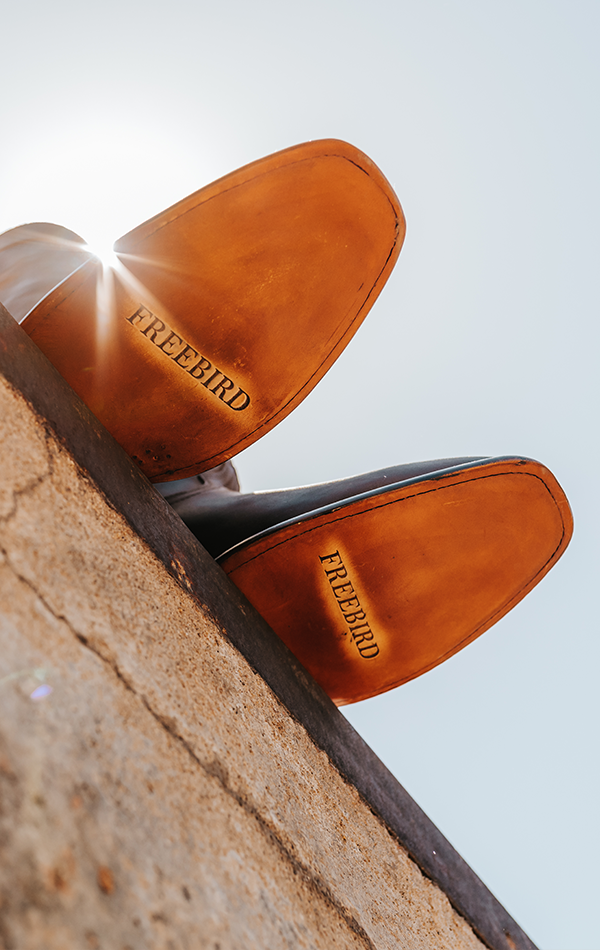
New leather has a personality of its own.
Some pairs feel buttery soft the moment you pull them from the box. Others need a few living-room laps before they begin to feel like they truly belong to you. Either way, breaking in new leather footwear should be a gradual process, not a test of how much discomfort you can tolerate.
The goal is simple: confirm that you have the right size, protect the original finish, and give the leather time to warm, flex, and mold to the natural shape of your foot.
This guide explains how to safely break in Freebird boots, booties, shoes, and sandals, including when to use thick socks, how to prevent blisters, which leather finishes should stay away from heat, and when discomfort is actually a sign that you need a different size.
Quick Navigation
Key Takeaways
- New leather should feel snug and supportive, but never painfully tight or restrictive.
- Your toes should be able to lie flat and move naturally without curling or pressing against the end.
- Always evaluate the fit indoors on a clean, carpeted surface before wearing the pair outside.
- Gradual wear is the safest and most effective way to break in leather footwear.
- Thick socks, moleskin, bandages, and blister-prevention spray can reduce friction during the process.
- Low-to-medium heat may help soften standard full-grain leather, but it should be used carefully and only after you have decided to keep the pair.
- Avoid heat on waxed leather, suede, patent leather, exotic finishes, hair-on-hide, and metallic or foil finishes.
- Sharp pain, cramping, numbness, or significant discomfort is not part of a normal break-in period.
- Stretching, heat, stretching spray, and other fit-altering treatments make footwear ineligible for return or exchange.
How Should New Leather Boots and Shoes Fit?

A correctly sized new pair should feel snug, secure, and supportive right out of the box.
Cowhide has been used in bootmaking for generations because it balances durability, flexibility, and comfort. New leather will naturally feel firmer before body heat and movement have had time to soften it. Some initial stiffness or mild pressure is normal.
As the leather breaks in, it should:
- Become more flexible
- Feel easier to slip on and off
- Begin to mold around the shape of your foot
- Feel comfortably secure rather than restrictive
- Move more naturally when you walk
What it should not do is force your foot into an unnatural position.
Your toes should have enough room to lie flat and move naturally. They should not curl, cramp, overlap, or press against the end of the shoe. The overall fit should feel supportive without causing sharp pain, numbness, or significant pressure.
Why the Same Size Can Feel Different Between Styles
Every Freebird style is shaped around a specific last.
A last is the three-dimensional mold used to shape a shoe or boot during construction. It determines the overall length, width, toe shape, proportions, and fit of the finished style.
Some lasts are narrow and streamlined. Others have a longer toe bed, wider shape, or different shaft construction. That is why the same size may feel slightly different in two Freebird silhouettes.
Always read the Fit Tips on the individual product page before selecting a size. Those notes provide style-specific guidance that a general size chart cannot.
Before You Begin: Make Sure You Are Keeping the Pair
Before using heat, stretching spray, a professional stretching service, or any other method designed to change the fit, make sure you are confident in the size.
Try the footwear on:
- Indoors
- On a clean, soft, carpeted surface
- With the type of socks you expect to wear
- Without scuffing the leather sole or heel cap
- Before applying conditioner, spray, heat, or stretching products
Keeping the leather sole and heel cap in their original condition is important if you decide to return or exchange the pair.
Important: Any footwear that has been stretched or altered is no longer eligible for return or exchange. This includes professional stretching and at-home methods involving heat, stretching spray, or other fit-changing treatments.
When you are unsure, pause before trying a break-in trick and contact the Freebird Customer Experience team for style-specific sizing guidance.
The Best Way to Break In New Leather Footwear
The safest break-in method is also the simplest: wear the pair gradually and let the leather soften naturally.
Step 1: Start With Short Indoor Sessions
Wear the footwear indoors on carpeted areas for a short period rather than committing immediately to an entire workday, wedding, festival, or night out.
Walking around the house allows your body heat and natural movement to begin softening the leather without placing hours of pressure on the same areas.
It also gives you time to notice whether the fit is improving, or whether a pressure point feels more like a sizing problem.
Step 2: Protect Areas Prone to Rubbing
If you notice friction at the heel, ankle, toe, or another specific spot, protect your skin before it turns into a blister.
Helpful options include:
- Moleskin
- A small bandage
- Blister-prevention spray
- A thin blister pad
Place moleskin or a bandage on your foot rather than attaching it permanently to the leather. The extra barrier reduces friction while the footwear begins to soften.
Step 3: Try Thick Socks
When the fit allows, wear the pair with thicker socks during short indoor sessions.
The added thickness creates gentle pressure from the inside, encouraging the leather to relax and begin taking the shape of your foot. Thick socks also provide an extra layer of protection from stiff edges or early hot spots.
The socks should create light, even pressure, not make the footwear painfully tight.
Step 4: Fully Open Every Closure
Do not try to force your foot through a partially opened boot, buckle, strap, or lace system.
Before putting the style on:
- Fully unzip the zipper
- Loosen adjustable back laces
- Unbuckle every strap
- Open any hook-and-loop closures
- Loosen traditional laces from top to bottom
Once your foot is properly seated, adjust each closure so the fit feels secure without cutting into your foot or restricting movement.
Step 5: Gradually Increase Wear Time
As the leather becomes more flexible, begin wearing the pair for longer periods.
There is no need to rush. Taking the process slowly helps reduce blisters, soreness, and irritation while allowing the leather to flex naturally in the same places your foot bends and moves.
A few shorter wears are usually more comfortable than one heroic attempt to break them in all at once.
Step 6: Let the Pair Rest Between Wears
Leather absorbs warmth and moisture during wear. Giving the footwear time to rest allows it to dry naturally and retain its shape.
When the pair is not being worn, store it in the original duster bags to help protect the leather from dust, light, and unnecessary exposure.
Can You Use a Hair Dryer to Break In Leather Boots?
Yes, in certain situations and on the right material.
Gentle heat can help soften standard full-grain leather, making a stiff or snug area more flexible. It should only be used after you have confirmed the size and decided to keep the pair.
The Freebird Hair-Dryer Method
- Remove the boots or shoes from your feet.
- Set the hair dryer to a low-to-medium heat setting.
- Direct the warmth toward the area that feels especially stiff or snug.
- Keep the dryer moving continuously rather than concentrating heat on one spot.
- Stop before the leather feels hot.
- Put on a pair of thick socks.
- Slip into the footwear while the leather is still gently warm.
- Walk around indoors so the softened area can begin conforming to your foot.
The goal is to gently warm the leather, not blast it with enough heat to dry, shrink, or alter it.
Moleskin can also be applied to any part of your foot experiencing friction before you put the warm footwear back on.
Can Sunlight Help Soften Leather?
Gentle or indirect sunlight may help warm and soften standard leather. Limit exposure to a few hours and monitor the footwear carefully.
Avoid prolonged or intense direct sunlight. Too much sun can dry leather or cause the color and finish to fade or discolor.
Which Leather Materials Should Avoid Heat?
Heat is not appropriate for every Freebird finish.
Standard full-grain leather can respond well to gentle warmth, but waxes, coatings, natural textures, and decorative finishes may change when heated.
| Material or Finish | Heat Guidance | Why |
|---|---|---|
| Smooth full-grain leather | Low-to-medium moving heat may be used carefully | Gentle warmth can soften firm leather |
| Waxed leather | Avoid excess heat | Heat can soften or dissipate the wax and change the signature finish |
| Genuine exotic or embossed exotic finishes | Avoid excess heat | Heat may alter the texture, scales, embossing, or surface finish |
| Patent leather | Avoid heat | Heat can dull, warp, or make the finish tacky |
| Hair-on-hide | Avoid heat | Heat may dry out the hide and damage the hair |
| Suede and nubuck | Avoid heat | Heat can dry the fibers and permanently change the nap |
| Metallic or foil finishes | Avoid heat | The finish may lift, separate, or crack |
For specialty finishes not listed here, contact Customer Experience before applying heat or attempting aggressive stretching.
How Long Does It Take to Break In Leather Boots?
Depending on how often the pair is worn, the break-in process can take anywhere from a few days to a few weeks.
There is no universal number of wears. Leather softens in response to warmth, movement, frequency of wear, and the individual shape of your foot.
Some customers notice a meaningful difference after one or two wears. More substantial or structured footwear may take longer to feel fully molded.
The key is that comfort should gradually improve. If significant pain stays the same or gets worse, the issue may be the size or shape rather than unfinished break-in.
Breaking In Boots, Booties, Shoes, and Sandals
The same gradual process applies across Freebird footwear, but different silhouettes may need attention in different places.
Boots and Tall Boots
Start with fully opened zippers, laces, or shaft closures. Wear the boots for short indoor periods and allow the shaft, ankle, and toe box to flex naturally.
Thick socks may help create gentle pressure while protecting the heel and ankle from friction.
Leather Booties
Booties often soften around the ankle, instep, and toe as you walk. Use short indoor sessions and protect any rubbing around the top edge with moleskin or a bandage.
Always fully unzip the bootie before putting it on rather than forcing your foot through the opening.
Leather Shoes
Pay close attention to friction around the heel, sides of the foot, and toe area. The shoe should feel secure without crushing the toes or creating numbness.
Short indoor sessions are especially useful because they reveal whether the upper is beginning to flex or whether the shape is simply incompatible with your foot.
Leather Sandals
Fully unbuckle or loosen every adjustable strap before putting the sandal on. Once your foot is properly positioned, adjust each strap until it feels comfortably secure.
The foot should not slide excessively, but the straps should not dig into the skin. Begin with shorter periods of wear and use moleskin or blister protection on areas where a new strap rubs.
Style-Specific Freebird Break-In Tips
Because every silhouette is built differently, certain Freebird styles benefit from a more specific approach.
COAL: Adjust the Back Lacing First

Before putting on COAL, fully loosen the back lace closure so your foot can slide comfortably into the boot.
Once your foot is in place, ask a store employee, friend, or family member to adjust the COAL laces to your preferred level of comfort. This first adjustment creates a more personalized shaft fit while the leather begins to soften and mold.
After the lacing is set, it can usually remain in place. Use the inside brass zipper to put the boots on and take them off.
Woodland: Try the Bag Trick
If your Woodland boots are difficult to slide into at first, two thin plastic bags can temporarily reduce friction.
Place one bag toward the toe and one around the heel. Another option is to place a single thin plastic bag over your bare or socked foot before sliding it into the boot.
Once your foot is completely inside and your heel is properly seated, gently pull the plastic bag out. Do not leave it inside while walking.
As the leather softens with wear, Woodland should become easier to put on without the bag.
Randi: Open Every Buckle

For Randi and other adjustable multi-strap styles, fully unbuckle all straps before putting the shoe on.
Once your foot is properly positioned, re-buckle each strap individually. The fit should feel secure and comfortably held without allowing your foot to slide around inside the shoe.
Trying to push your foot through closed or partially opened straps can place unnecessary stress on both the leather and the hardware.
Jules: Pay Attention to the Slimmer Last
Jules is built on a narrower, slimmer last and may feel firmer out of the box.
Customers with a narrow foot should generally begin with their regular size. Customers with a wider foot may find sizing up more comfortable.
Break-in can soften the leather, but it will not transform a narrow last into a completely different shoe shape. Review the Fit Tip on the product page before deciding whether the initial snugness is normal for your foot.
Can Leather Boots Overstretch?
When the correct size has been chosen, leather should naturally soften and mold around the foot without stretching far beyond the original shape.
Break-in is not supposed to turn a shoe that is dramatically too small into the right size. It should make a correctly sized pair more flexible, responsive, and comfortable.
Aggressive stretching can distort the shape, strain seams, alter the construction, or create an uneven fit. Aim for gradual adaptation, not a major size change.
Break-In Methods to Avoid
The internet has no shortage of creative leather “hacks.” Some are more likely to damage your footwear than improve the fit.
Do Not Soak Leather in Water
Never submerge or soak leather, suede, or exotic footwear in warm or hot water.
Excess moisture can affect:
- The shape
- The finish
- The lining
- The stitching
- The adhesives
- The sole construction
Leather footwear should never be treated like a pair of athletic shoes headed for the washing machine.
Do Not Use Excessive Heat
Avoid radiators, heaters, heating vents, fireplaces, and other concentrated heat sources.
High temperatures can dry out leather, cause cracking or shrinkage, damage adhesives, and alter specialty finishes. Hair dryers and gentle sunlight should only be used in small, controlled doses on compatible materials.
Do Not Force the Leather to Bend or Twist
Aggressively folding, twisting, or crushing footwear does not create a natural break-in pattern.
Leather will flex in the places where your foot moves. Forcing it to bend elsewhere can create unwanted creases, distort the shape, or stress the construction.
Do Not Power Through Sharp Pain
Mild stiffness and light pressure may be normal. Sharp pain is not.
Stop wearing the footwear if you experience:
- Cramping
- Numbness
- Pinching that feels severe
- Toes pressing painfully against the end
- Significant restriction
- Pain that becomes worse with each wear
A break-in period should become progressively more comfortable, not progressively more painful.
Do Not Apply Harsh or Unapproved Products
Avoid alcohol, household oils, random conditioners, and other products that are not approved for the specific leather or finish.
The wrong product can alter the color, texture, wax, shine, or surface treatment. A leather product that is appropriate for one pair may damage suede, patent leather, genuine exotic material, or a waxed finish.
Do Not Overstretch the Footwear
Avoid trying to create a major fit change in one session. Excessive stretching can alter the shape and place unnecessary stress on the leather, stitching, zipper, and structure.
When Should You Stop Trying to Break In a Pair?
Stop the break-in process if you experience significant pain, cramping, numbness, or discomfort that feels abnormal.
Persistent discomfort can indicate that:
- The size is incorrect
- The last is not compatible with your foot shape
- The toe box is too short or narrow
- The shaft or instep fit is too restrictive
- The pair needs professional evaluation
Do not keep wearing the footwear in the hope that sharp pain will eventually disappear.
When the pair is still unworn and unaltered, contact the Freebird Customer Experience team before trying another treatment. The team can help determine whether you should continue breaking it in, exchange the size, or consider another style.
When to Consider Professional Stretching
Once you are confident that you are keeping the pair, professional stretching may help address a specific pressure point or localized area of tightness.
Freebird store locations offer complimentary boot stretching. You can also consult a local cobbler or use Cobblers Direct for professional stretching, resoling, and repair services.
Remember that professional stretching permanently alters the fit and makes the pair ineligible for return or exchange.
Cobblers Direct is an independent repair partner. Freebird does not receive referral compensation and is not responsible for items lost, stolen, or damaged during the repair process. All services are optional and arranged directly through Cobblers Direct.
What Freebird Customers Say About Break-In
Individual experiences vary, but customer reviews show how properly fitted leather can become more comfortable with wear.
“These boots are stunning, beautiful, and look amazing. They take a bit to break in for me, yet I love wearing them because they are so well made and substantial.”
— Joseph F., Marshall
“Gorgeous boots. Wonderful quality. They get more comfortable as they break in.”
— Cara S., COAL
“Love the uniqueness of these! Did take a wear or two to break in, but now that they are broken in they are super comfortable.”
— Kylie B., Stardom
Frequently Asked Questions
Should New Leather Boots Feel Tight?
They should feel snug, secure, and supportive, but never painfully tight.
Some firmness is expected before leather warms and softens. Your toes should still lie flat and move naturally without cramping or pressing against the end.
What Is the Fastest Safe Way to Break In Leather Boots?
Gradual indoor wear is the safest method.
Short sessions, thick socks, and friction protection allow the leather to soften while reducing the risk of blisters. Gentle low-to-medium heat may accelerate the process on compatible full-grain leather, but it should only be used after confirming the fit.
Can I Use a Hair Dryer on Leather Boots?
A hair dryer may be used carefully on standard full-grain leather.
Keep the footwear off your feet while warming it, use a low-to-medium setting, and keep the dryer moving continuously. The leather should become gently warm, never hot.
Avoid heat on waxed, patent, suede, nubuck, exotic, hair-on-hide, metallic, and foil finishes.
Can I Use a Hair Dryer to Dry Wet Leather Boots?
No.
Using a dryer to gently warm a stiff area during break-in is different from using it to dry saturated leather. Wet leather should air dry naturally at room temperature away from heaters, radiators, direct sunlight, and hair dryers.
Can I Soak Leather Boots to Stretch Them?
No. Do not submerge leather footwear in water.
Soaking can alter the shape, finish, lining, sole, adhesives, and overall construction.
How Do I Break In Leather Shoes Without Getting Blisters?
Begin with short indoor sessions and protect likely friction points before they become painful.
Moleskin, bandages, blister-prevention spray, and thicker socks can create a barrier between stiff leather and the skin. Increase wear time only as the leather becomes more flexible.
How Do I Break In Leather Sandals?
Open every buckle or adjustable strap before putting the sandal on. Position your foot correctly, then secure each strap so it feels supportive without digging into the skin.
Wear the sandals for short periods at first and use moleskin or blister protection where the straps rub.
Will Leather Boots Stretch a Full Size?
Break-in is meant to soften leather and help it mold to the foot, not create a dramatic size change.
A correctly sized pair may become more forgiving and comfortable, but a pair that is clearly too short or painfully narrow should be exchanged rather than aggressively stretched.
How Long Should Leather Boots Take to Break In?
The process can take a few days to a few weeks depending on frequency of wear and the individual pair.
Comfort should steadily improve. Persistent or worsening pain is a reason to reassess the fit.
Can I Return Boots After Using Heat or Stretching Spray?
No. Heat, stretching spray, professional stretching, and other methods that alter the fit make footwear ineligible for return or exchange.
Evaluate the size indoors on a clean, carpeted surface before applying any treatment.
Let the Leather Learn Your Story
The best leather footwear does not stay exactly as it arrived.
It softens. It flexes. It begins to reflect the way you move. Over time, a properly fitted pair becomes less like something you put on and more like something that belongs to you.
Take the break-in process slowly. Start with the right size, listen to your feet, protect areas prone to friction, and treat the material with the care its finish requires.
The goal is not to conquer your new shoes. It is to give great leather enough time to become yours.